Isro engine test paves way for next Chandrayaan-class rocket launch
Isro has cleared the cryogenic engine that powers its heaviest rocket for the next LVM3 mission after a successful hot test.
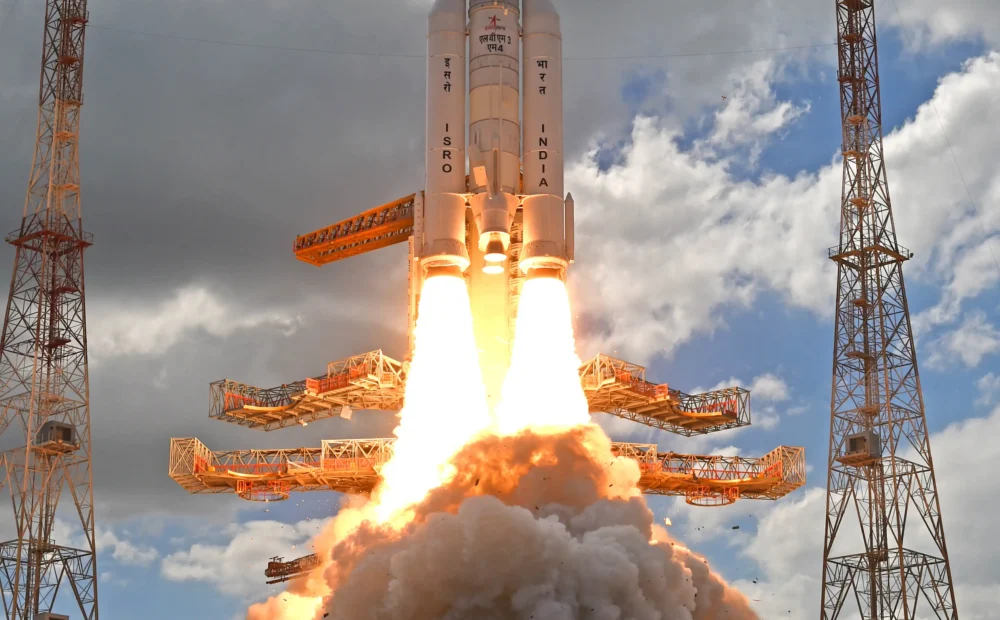
Isro has cleared the cryogenic engine that powers the upper stage of its heaviest operational rocket, the LVM3, for its next mission after a successful flight acceptance hot test on 6 July at the Isro Propulsion Complex in Mahendragiri.
The CE20 engine has flown on eight consecutive LVM3 missions to date, including Chandrayaan-2 and Chandrayaan-3, and has also completed the human-rating qualification needed for the Gaganyaan human spaceflight programme. The latest test cleared it for use in the next mission, designated LVM3-M7, for which Isro has not yet announced a launch date.
The test also marked the first flight acceptance use of a newly developed Nozzle Protection System, which Isro said performed satisfactorily alongside the engine. During the test, the CE20 ran at 19.5 tonnes of thrust for 45 seconds before being ramped up to its maximum rated thrust of 22 tonnes for another 25 seconds.
Isro said the new system allows testing of the engine’s full area-ratio 100 nozzle under sea-level conditions, a process that previously required complex high-altitude facilities to simulate near-vacuum conditions, cutting the resources needed for testing.
The engine will now be refurbished and integrated with the C32 cryogenic stage being prepared for the LVM3-M7 mission.


Leave a Reply