Japan just found hair loss’s missing ‘third cell’ — and it works
Japanese researchers at RIKEN and OrganTech have identified a previously unknown 'third cell' that, combined with two already-known cell types, reconstructed a complete, functioning hair growth cycle in mice.
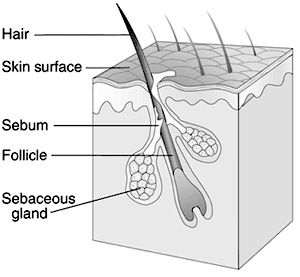
Scientists in Japan say they have identified a missing biological piece that could finally allow hair follicles to be rebuilt from scratch rather than merely slowed from falling out. Researchers at Japan’s RIKEN Institute, working with the Tokyo-based regenerative medicine company OrganTech, discovered a previously unrecognized ‘third cell’ that, when combined with two already-known cell types, successfully reconstructed a complete, functioning hair follicle. The findings were published in the journal Biochemical and Biophysical Research Communications.
Pattern hair loss affects roughly 80% of men and 50% of women at some point in their lives, and for many people it is a source of real distress tied to confidence and self-image. Existing options, from oils to surgical transplants, mostly work by slowing the loss of hair rather than regenerating follicles that have already stopped functioning. The new research, led by longtime RIKEN visiting senior researcher and OrganTech chairperson Takashi Tsuji, aims squarely at that gap.
Tsuji has spent close to two decades developing techniques to regenerate organs from adult stem cells. His team’s starting point was a 2012 breakthrough in which researchers combined epithelial stem cells and dermal papilla cells taken from adult mouse whiskers to build the foundation of a hair follicle; once transplanted, these cells could induce new hair growth. But something was still missing — after transplantation, extra cells from the surrounding tissue kept migrating in to support the lab-grown structure, hinting that the follicle could not function as a fully independent unit on its own.
Using specialised cell-isolation techniques, the team tracked down that missing piece: what they call around-bulge mesenchyme, or ABM, cells, found in tissue near the hair follicle. When these ABM cells were layered together with the two previously known cell types and transplanted into engineered skin, all three worked in concert to reproduce the complete hair cycle — including repeated rounds of growth and shedding — in laboratory conditions, successfully tested in mice.
The study also uncovered a detail about how hair actually grows that hadn’t been clearly documented before: rather than the follicle simply pushing the hair shaft upward, the hair bulb at the follicle’s base gradually shifts downward toward the subcutaneous fat layer as the visible hair rises through the skin — a process the researchers call ‘downgrowth,’ driven by the newly identified cells as they differentiate.
Because current alopecia treatments work within the body’s existing system rather than rebuilding damaged structures, the researchers say the next step could be harvesting regeneration-supporting cells from patients, expanding them in culture, and reintroducing them to affected areas. OrganTech CEO Yoshio Shimo said the work “defines a foundational cellular configuration for functional hair follicle regeneration,” adding that it also reinforces the company’s broader push toward organ-level regenerative medicine built on precisely orchestrated cell interactions.
Image credit: Wikimedia Commons/NIH (public domain).


Leave a Reply