Mountain lion or bobcat? How to tell North America’s two big wild cats apart
Mountain lions and bobcats look nothing alike up close, but the two North American wild cats are often confused from a distance.
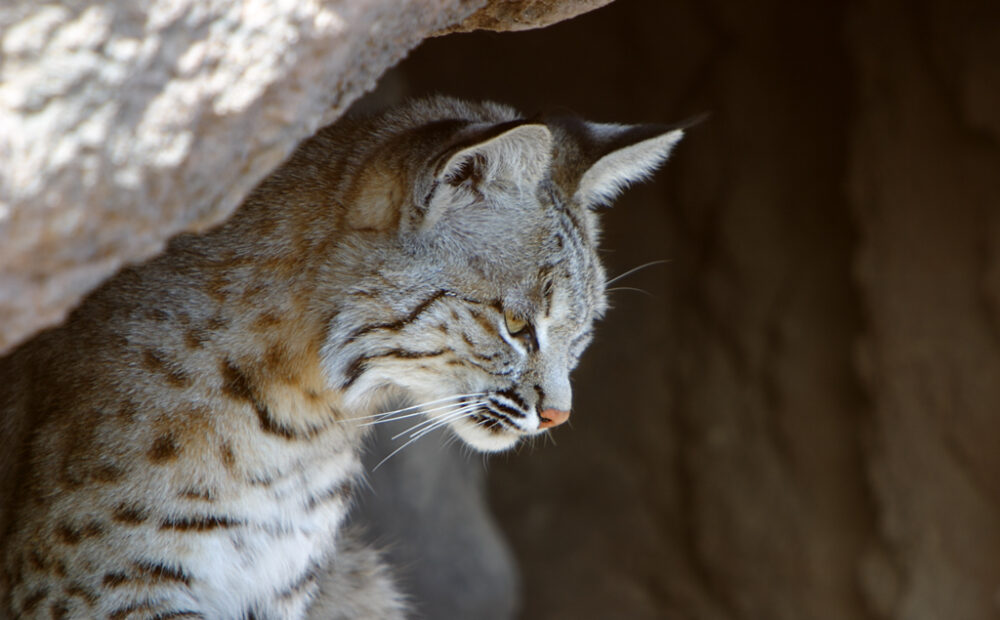
At first glance, confusing a mountain lion and a bobcat would be difficult. A mountain lion has a long, athletic body built for covering ground and overpowering sizeable prey, with a plain tawny coat and a long tail that helps with balance during fast turns and leaps. The bobcat looks stockier, with a short, “bobbed” tail that gives the species its name, flared facial fur, distinctive black-marked ears, and often a spotted or patterned coat rarely seen in mountain lions.
Scientifically, the two aren’t even close relatives within the cat family — the mountain lion is Puma concolor, while the bobcat is Lynx rufus. Size makes the difference stark: adult male mountain lions are often several times heavier than a bobcat, and placed side by side, a large mountain lion can make a bobcat look almost modest in comparison.
Their ranges also differ. Mountain lions occupy one of the largest ranges of any land mammal in the Western Hemisphere, stretching from western Canada deep into South America, while bobcats are restricted to North America, found across much of the United States, southern Canada and parts of Mexico. Bobcats are also far more tolerant of human-altered landscapes, with camera traps often recording them moving through suburban green spaces at night — one reason people are more likely to spot a bobcat than a mountain lion.
Both are solitary, stealth hunters, but their prey scales differently: mountain lions regularly target deer and other medium-sized mammals, sometimes attempting prey far heavier than themselves, while bobcats usually focus on rabbits, rodents and other small vertebrates.
Leave a Reply