This fish has no red blood cells: how it survives Antarctica’s ice
The Antarctic icefish is the only known vertebrate that loses haemoglobin as an adult, yet it has survived in the freezing Southern Ocean for millions of years.
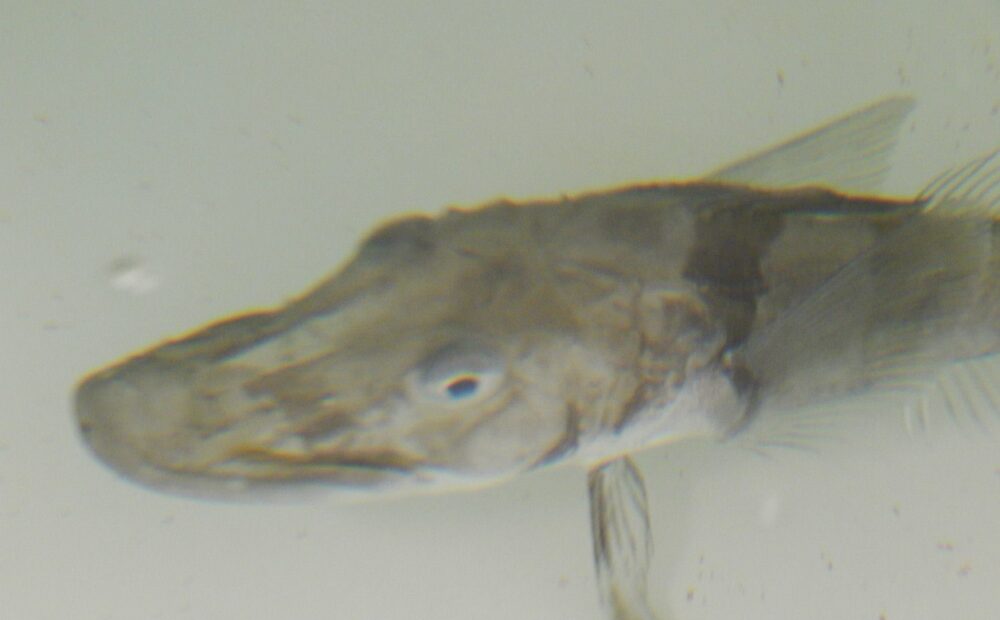
A fish living beneath the Antarctic ice has almost no red blood cells, no haemoglobin, and in some species, no myoglobin either. Its blood is pale, watery and nearly clear. By every normal rule of vertebrate biology, an animal missing these oxygen-carrying proteins should not be able to survive.
Yet the Antarctic icefish, from the family Channichthyidae, has lived in the freezing waters around Antarctica for millions of years. It is the only known vertebrate that loses haemoglobin as an adult, and scientists have spent decades trying to understand how it manages to stay alive without it.
According to a 2006 commentary published in the Journal of Experimental Biology by Bruce D. Sidell of the University of Maine and Kristin M. O’Brien, the icefish did not lose haemoglobin because the loss was useful. It happened because of a genetic mutation, and that mutation brought serious disadvantages: without haemoglobin, an icefish’s blood can carry less than 10% of the oxygen carried by the blood of closely related red-blooded fish.
To cope with that shortfall, the icefish’s body changed dramatically. Its heart is four to five times larger relative to its body size than the hearts of related red-blooded fish, it carries up to four times more blood, and its blood vessels are much wider, all of which help push a larger volume of thin, oxygen-poor blood around the body faster. The trade-off is steep: icefish spend roughly twice as much energy pumping blood as their red-blooded relatives do.
Some icefish species went a step further and also lost myoglobin, the protein that stores oxygen inside muscle tissue, through separate genetic mutations that occurred at different points in time. This surprised researchers, since a heart containing myoglobin is known to perform better under stress; losing it should have made survival harder, not easier.
The answer to how the icefish manages anyway lies in its environment. Cold water holds far more dissolved oxygen than warm water, and in places near the Ross Ice Shelf, where temperatures fall to around -1.9°C, the surrounding water is almost fully saturated with oxygen. Because of this abundance, icefish can absorb oxygen directly through their blood plasma and through their scaleless skin, reducing their reliance on haemoglobin. They also evolved from slow-moving ancestors with naturally low energy demands, which makes survival easier on a much smaller oxygen-carrying budget.
Researchers believe a signalling molecule called nitric oxide may also be part of the explanation. When icefish lost haemoglobin and myoglobin, they also lost one of the main ways of breaking that molecule down, causing nitric oxide levels to rise throughout the body. Scientists suspect that this rise in nitric oxide triggered many of the physical changes seen in icefish today, as the animal’s body gradually adapted around the loss of two proteins vertebrates normally cannot live without.
Wikimedia Commons/by Ambiederman



Leave a Reply