Meet the microbes that rewired Earth’s air: the 2.4-billion-year mystery finally coming into focus
Around 2.4 billion years ago, oxygen-producing cyanobacteria triggered the Great Oxidation Event, permanently transforming Earth's atmosphere and oceans.
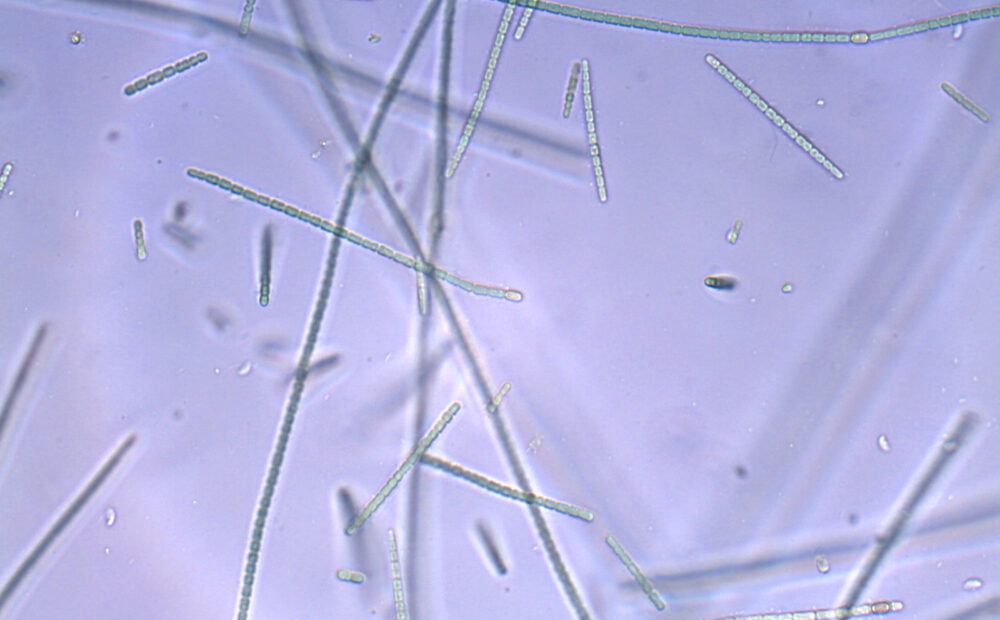
Long before continents were covered in green or animals walked the Earth’s surface, the planet’s atmosphere held almost no oxygen at all. Instead, gases like methane and carbon dioxide dominated the skies while simple microbial life thrived in conditions that would be lethal to most organisms alive today.
That changed around 2.4 billion years ago, when microscopic organisms called cyanobacteria fundamentally altered Earth’s chemistry by producing oxygen through photosynthesis. Scientists refer to this turning point as the Great Oxidation Event, and according to a review titled ‘The rise of oxygen in Earth’s early ocean and atmosphere’, published in Nature, the shift permanently reshaped the planet’s atmosphere, oceans, and the future course of evolution.
The review makes clear that this was not a sudden switch. Free oxygen first built up in the atmosphere, then lagged behind in the oceans, and only reached levels close to today’s roughly two billion years later. Researchers describe the process as a coupled biological and geochemical story, in which early oxygen production was constantly counterbalanced by reactions with reduced gases and minerals.
Cyanobacteria are thought to have evolved oxygen-producing photosynthesis hundreds of millions of years before atmospheric oxygen actually began to accumulate. In the interim, the oxygen they released reacted with dissolved iron and other reduced compounds in the ocean and Earth’s crust, acting as natural ‘oxygen sinks’ that stopped it from building up in the air. Only once those sinks became saturated did oxygen start accumulating in significant amounts, around 2.4 billion years ago.
One of the clearest pieces of evidence for this shift comes from ancient rocks. Geologists have identified a sudden disappearance of mass-independent fractionation of sulfur isotopes in sedimentary rocks dating to about 2.4 billion years ago — a chemical signature that can only exist when atmospheric oxygen levels are extremely low. Its disappearance is considered one of the strongest indicators that oxygen levels had risen.
According to the Annual Review of Earth’s Planetary Sciences, the Great Oxidation Event laid the environmental groundwork for the later evolution of complex eukaryotic cells and, eventually, multicellular life. Scientists are still investigating exactly why oxygen accumulated when it did, and the Nature review notes that researchers are currently examining the roles of microbial communities, volcanic activity, nutrient availability, and broader geological processes.
Wikimedia Commons


Leave a Reply