Dartmouth researchers found a clever use for aluminum foil and your Wi-Fi
Researchers at Dartmouth College developed WiPrint, a system that uses aluminum-coated reflectors to redirect Wi-Fi signals indoors while reducing how much leaks outside.
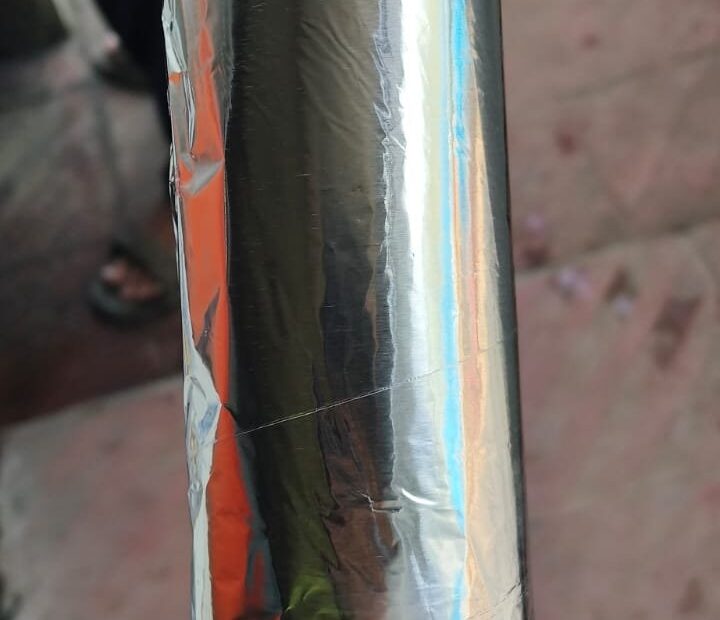
Aluminium foil is hardly the first thing that comes to mind when thinking about home networking. Yet researchers at Dartmouth College have found that, when shaped into a specially designed reflector and positioned behind a Wi-Fi router, this everyday material can redirect wireless signals towards the rooms where they’re needed while reducing how much spills beyond the walls.
Most home routers behave a bit like an unshaded light bulb, broadcasting radio waves in almost every direction. While that provides broad coverage, part of the signal inevitably spills into neighbouring flats, corridors or the street, areas where it serves little purpose for the owner.
To tackle this, the Dartmouth team developed WiPrint, a system that uses custom-shaped reflectors made from 3D-printed plastic coated with a thin layer of aluminium. Rather than an ordinary sheet of kitchen foil, each reflector is precisely designed to match the layout of a specific room, redirecting the router’s radio waves toward areas needing stronger coverage while limiting transmission elsewhere.
Presented at the ACM International Conference on Mobile Computing and Networking, the project demonstrated signal strength gains of up to 6 decibels in target locations, reductions of up to 10 decibels in areas where coverage was intentionally minimised, and wireless throughput improvements of as much as 55%.
Unlike mesh systems, repeaters or signal boosters, WiPrint works entirely passively, requiring no electricity, software updates or network configuration once installed.
Image: Wikimedia Commons/by ShriniwasGajare


Leave a Reply