Eight years after a magnetic bioprinter in space, scientists just grew a kidney
Auxilium Biotechnologies and the Wake Forest Institute for Regenerative Medicine have bioprinted kidney and liver tissue aboard the International Space Station for the first time, eight years after an earlier cartilage-printing experiment on the same station.
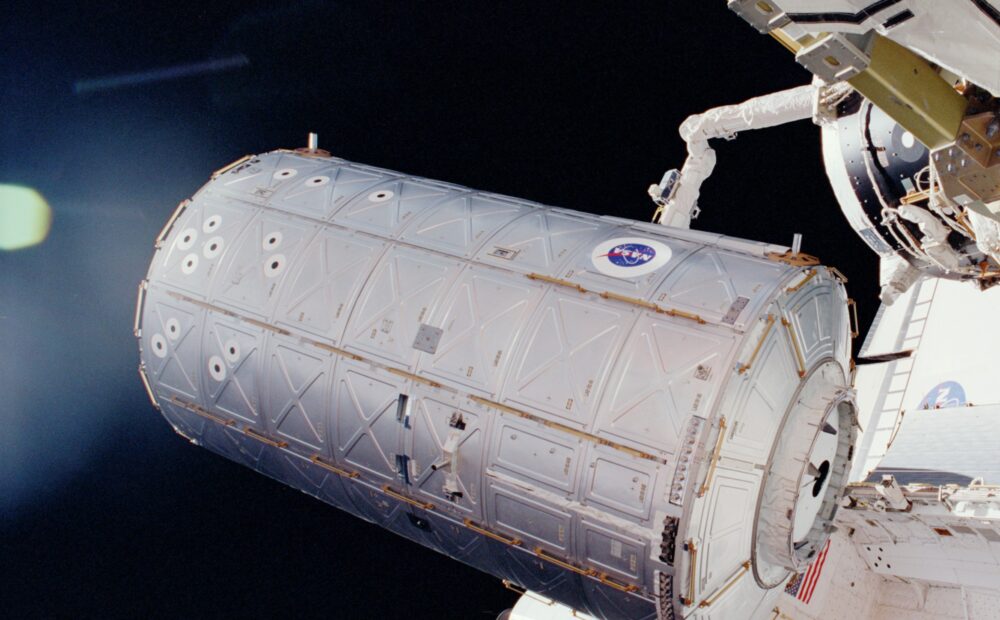
In 2018, Russian cosmonaut Oleg Kononenko sat aboard the International Space Station and tested a device called the ‘Bioprinter Organ.Aut,’ using a magnetic field to assemble cartilage cells. It was a curiosity at the time. Eight years later, that curiosity has turned into something closer to a factory process.
In June 2026, Auxilium Biotechnologies and the Wake Forest Institute for Regenerative Medicine used a bioprinter called AMP-1 aboard the ISS to produce liver and kidney tissue in microgravity — the first time either tissue type has been made in orbit. The materials returned to Earth safely in a SpaceX Dragon capsule on 17 June.
The mission’s output was broader than organs alone: liver tissue for functional studies, kidney tissue, cartilage samples for orthopaedic purposes, and 28 implants built to repair damaged nerves all came out of the same flight.
‘The ability to produce different types of tissues alongside clinically relevant medical products demonstrates both the versatility and scalability of our technology,’ said Isac Lazarovits, Auxilium’s Vice President of Engineering, in a statement.
Antony Atala, director of the Wake Forest Institute for Regenerative Medicine, explained why space works better than Earth for this: without weight pulling on cells, they distribute more evenly inside a tissue structure. On Earth, cells can cluster in the wrong places, which stops tissue from functioning as intended.
Auxilium co-founder Jacob Koffler said no one on Earth has found a way to fully control where cells end up inside a printed structure — microgravity solves that. He expects the field to move toward smaller tissue patches for repairing organs like the liver before attempting full replacement organs. ‘It’s going to take some years until we get to the clinic,’ he said, ‘but it’s important to start building that framework now.’
Image: NASA/Wikimedia Commons

Leave a Reply