A shark that’s been around 125 million years was just filmed alive in the wild for the first time
Researchers from the University of Hawai'i filmed live goblin sharks in the deep Pacific Ocean, capturing footage of a species that had never before been observed alive in its natural habitat.
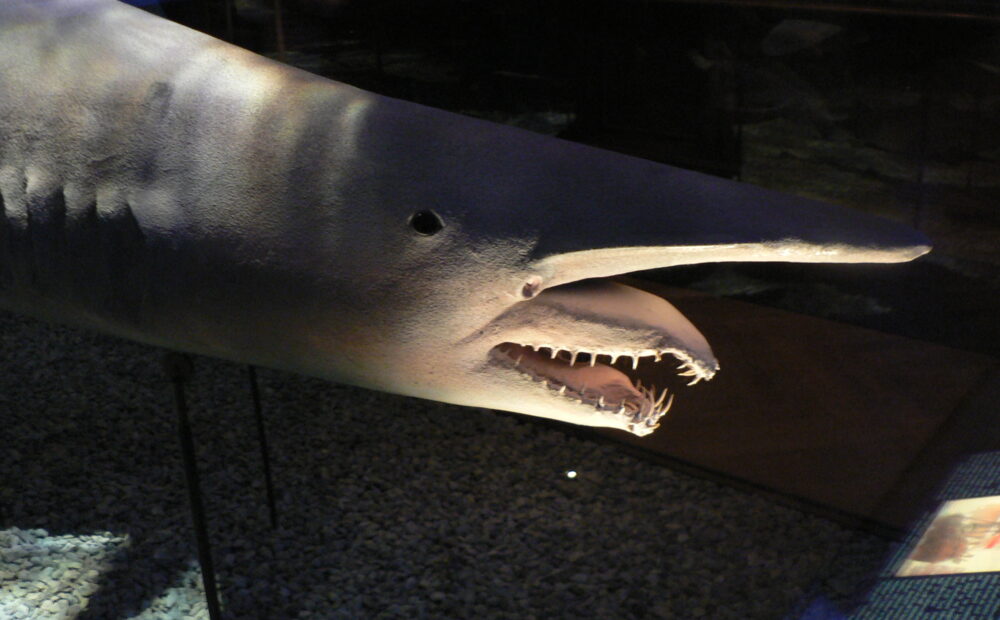
For the first time, scientists have filmed live goblin sharks swimming freely in their natural deep-sea habitat, giving researchers a glimpse of one of the world’s rarest and most mysterious sharks without ever pulling it out of the ocean.
The findings, published in the Journal of Fish Biology and led by a research team from the University of Hawai’i at Mānoa, describe two separate encounters with healthy goblin sharks (Mitsukurina owstoni). Until now, every verified sighting or video of a live goblin shark had come only after the animal was accidentally caught by fishing gear and brought to the surface, where it usually died soon after.
Goblin sharks are often called ‘living fossils’ because they are the only surviving members of a shark family dating back around 125 million years. Their long, flattened snout and protruding jaws make them one of the most recognisable deep-sea sharks, yet they have remained hidden largely because of the extreme depths at which they live.
One shark was spotted near a seamount close to Jarvis Island in the Central Pacific, while the second was recorded along the slope of the Tonga Trench, hundreds of kilometres away. Together, the two sightings suggest goblin sharks occupy a far larger stretch of the Pacific than scientists previously believed.
Aaron Judah, the paper’s lead author and a doctoral candidate at UH Mānoa’s Deep-Sea Animal Research Center, said seeing the species alive and healthy in its natural habitat was ‘a unique honor’. He added that he was surprised by how deep the Tonga Trench shark was found: nearly 700 metres deeper than the species was previously known to live, a new depth record not just for goblin sharks but for the entire order of mackerel sharks, which also includes the great white and mako.
Leave a Reply