Japan pays ghost hunters 88,000 yen to sleep in haunted homes
A Japanese company is hiring specialists to spend the night in stigmatized 'haunted' properties and certify them safe, as the country grapples with nine million vacant homes.
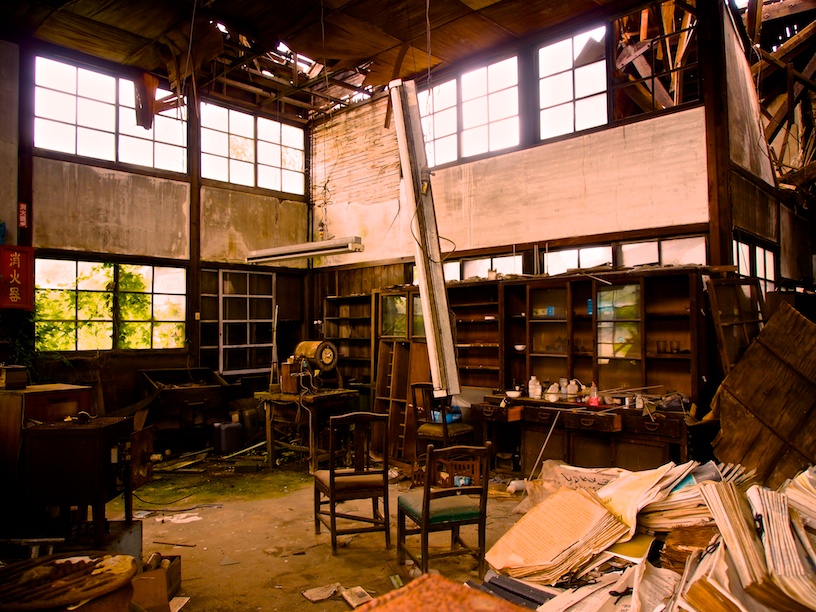
In Japan, a growing number of property owners are paying strangers 88,000 yen (around Rs 31,000, or $542) to spend an entire night alone inside houses where someone died. The job is not a prank or a reality show stunt; it is a real, paid service called a ‘ghost investigation,’ run by a property management company named Kachimode, and it exists to solve a very specific real estate headache: making a haunted house sellable again.
The properties in question are known in Japan as ‘jiko bukken,’ or stigmatized properties. The label applies to any home where a suicide, a murder, a fatal fire, or a ‘lonely death’ — an elderly person dying alone and going undiscovered for a long time — has taken place. Kazutoshi Kodama, president of Kachimode, told German broadcaster DW that many Japanese people associate death with impurity and misfortune, and often will not even step inside such a home, let alone rent or buy it.
One two-storey house in Yokohama has sat empty for at least five years for exactly this reason, according to Kodama, despite being structurally sound enough to renovate into a comfortable home. To break that cycle, Kachimode sends an investigator to stay inside the property from 10 p.m. to 6 a.m., armed with video cameras, audio recorders, thermography equipment, electromagnetic wave detectors, and sensors tracking temperature, humidity, air pressure and noise. The goal is to document, hour by hour, that nothing unexplained is happening.
Kodama, who also works with a university professor specializing in monitoring supernatural phenomena, said the equipment has occasionally picked up odd glitches — a video camera stopping unexpectedly, a microphone malfunctioning — but in the vast majority of cases, whatever triggered it cannot be reproduced and is written off as a one-time fluke. A smaller number of properties, he said, show unexplained activity over extended periods, and those remain especially hard to rent or sell even after investigation.
The stakes are real money. Japanese law requires agents to disclose a property’s stigmatized history to any prospective buyer or tenant, and dedicated websites even catalogue which homes carry the label and why. As a result, landlords typically cut rents by around 30% in big cities and by as much as 50% in smaller towns; Kodama knows of one property that stayed vacant for more than 1,000 days despite repeated attempts to fill it.
The underlying problem is bigger than any single haunted house. A Japanese government survey from late 2024 counted nine million vacant homes nationwide, or 13.8% of all residential properties, driven by population decline, inheritance disputes and ageing communities — with cultural beliefs about death adding another layer of difficulty. Joey Stockerman, co-founder of Akiya Mart, which also deals in vacant Japanese homes, recalled an investor who bought a stigmatized Tokyo-suburb property for under $5,000, roughly 5% of its actual value — yet it still sat empty for two years because the history had to be disclosed. Akiya Mart now offers its own fix: a package where a Shinto priest performs a cleansing ritual before the home goes back on the market.
[Wikimedia Commons/by Syuzo Tsushima]



Leave a Reply