Nature Beat Humans to Nuclear Power by 2 Billion Years — Here’s How
A study says a uranium deposit at Oklo in Gabon became Earth's only known self-sustaining natural nuclear reactor around two billion years ago.
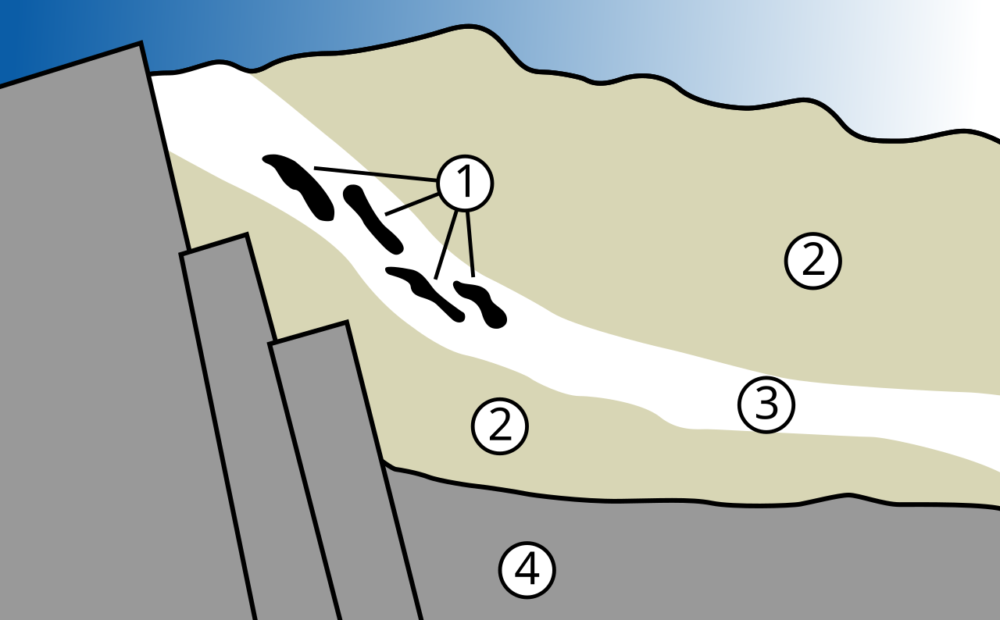
Long before humans built a single reactor, nature had already figured out nuclear fission on its own, according to a study titled ‘The Workings of an Ancient Nuclear Reactor’. Around two billion years ago, a uranium-rich deposit at Oklo in what is now Gabon turned into the only known self-sustaining natural nuclear reactor on Earth.
The reactor sat hidden beneath rock at Oklo and cycled on and off repeatedly as groundwater moved in and out of the deposit, with heat from fission boiling the water away before the process began again, according to findings reported in Nature under the title ‘Ancient nuclear power controlled by water’.
The reaction was possible because of how different Earth’s uranium looked two billion years ago. Back then, the fissile isotope uranium-235 made up around 3% of all uranium, a concentration high enough to sustain a chain reaction without any artificial enrichment. Research compiled by Nuclear Power and historical studies of the site show that uranium concentrated in sandstone deposits, while groundwater seeping into the ore acted as a neutron moderator that slowed neutrons enough to keep fission going.
Rather than running continuously, the reactor regulated itself: fission heat boiled away the surrounding groundwater, removing the moderator needed to sustain the reaction, and once the rock cooled, water seeped back in and the cycle restarted. A reconstruction published in Nature estimates the pattern as roughly 30 minutes of active fission followed by about 2.5 hours of inactivity, repeating over an estimated 150,000 years.
The phenomenon was only recognised in 1972, when French researchers studying uranium ore from Oklo noticed its uranium-235 concentration was slightly lower than expected — a gap that natural radioactive decay alone could not explain. Further investigation, backed by the U.S. Geological Survey, confirmed the uranium had already undergone sustained nuclear fission billions of years earlier, and later surveys identified more than a dozen separate reactor zones across the Oklo and nearby Okelobondo deposits, each generating around 100 kilowatts of thermal power.
Scientists now treat Oklo as more than a curiosity: with radioactive by-products remaining trapped in the surrounding rock for close to two billion years, the site has become a natural laboratory for studying how spent nuclear fuel might behave in deep geological storage, according to research published in the Journal of Contaminant Hydrology and Nature. The site has also been used to test whether fundamental physical constants have stayed the same over billions of years.
Wikimedia Commons/by MesserWoland


Leave a Reply