The largest fuel ship in the US Navy disappeared in 1918. It’s still the biggest naval mystery no one has solved
The USS Cyclops, the largest fuel ship in the US Navy at the time, vanished in 1918 with 306 people aboard and remains one of America's most enduring unsolved mysteries.
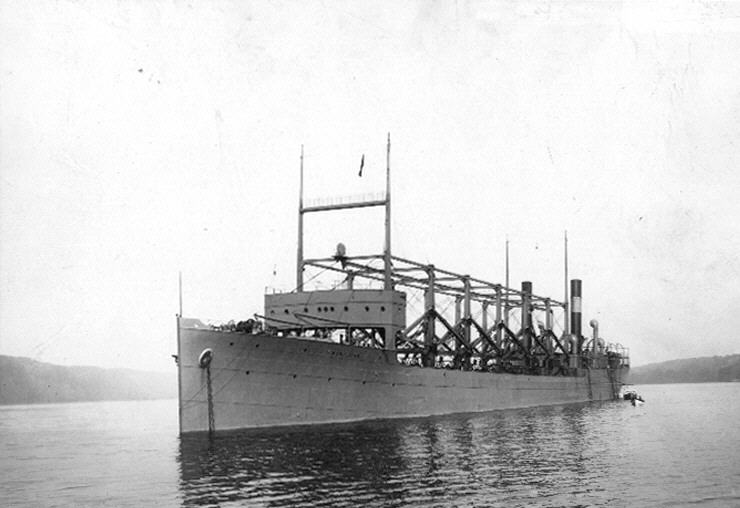
When the USS Cyclops departed Barbados on March 4, 1918, it was the largest fuel ship in the U.S. Navy, carrying roughly 11,000 tons of manganese ore and 306 officers, sailors and passengers on what should have been the final leg of a routine voyage to Baltimore. It never arrived, and more than a century later, the disappearance remains one of America’s most enduring naval mysteries.
The 540-foot Proteus-class collier, built in Philadelphia, had originally been designed to transport coal for the Navy’s fleet but was reassigned during World War I to carry strategic cargo, according to the U.S. Naval Institute. Its final mission began in January 1918, sailing from Norfolk, Virginia, to Rio de Janeiro with coal before taking on manganese ore, an essential material for steel production, for the return trip. After stops in Bahia and an unscheduled call in Barbados, the ship departed on March 4 and was expected in Baltimore by March 13. No distress signal was ever transmitted, and no wreckage has ever been recovered.
Investigators have proposed a range of explanations over the years, including mechanical problems, severe weather and cargo overloading, though none has been conclusively proven. Former executive officer Conrad A. Nervig later argued that the ship may have suffered catastrophic structural failure after its dense manganese cargo was improperly distributed, placing excessive stress on the hull.
While popular theories have linked the loss to the Bermuda Triangle, German U-boats, or even paranormal forces, historians note none of these claims is backed by evidence — postwar German naval records found no submarines operating in the area at the time. More than 100 years later, the USS Cyclops continues to attract researchers precisely because even one of the era’s largest vessels could vanish without leaving a confirmed trace.


Leave a Reply