Why aspen forests resist fire while pine and spruce burn easily, explained
Scientists say aspen trees resist wildfires far better than conifers due to higher moisture content and chemical differences.
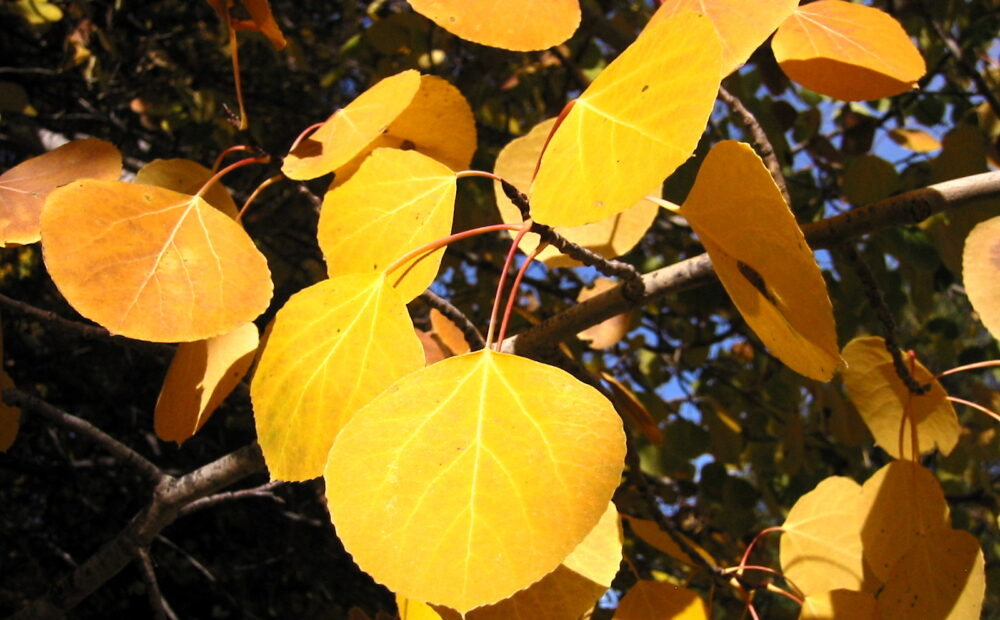
Aspen resists fire far better than pine, spruce or fir, and the reasons come down to fairly straightforward physical differences between the species, according to researchers at Colorado State University who contributed to a recent study on wildfire spread.
Aspen has long been understood to be more fire-resistant because of the higher moisture content in its foliage and understory, along with high branches and chemical differences that reduce overall flammability. Unlike densely packed conifer stands, where resinous needles and continuous canopy fuel can carry fire quickly from tree to tree, aspen forests hold more moisture in both their leaves and the vegetation growing beneath them, making it considerably harder for flames to establish and spread.
The study, published in Ecological Applications, examined 314 wildfires across the southwestern United States between 2001 and 2020 and found that fire spread rates dropped sharply once aspen cover exceeded 25% of the landscape — from an average of 1,112 hectares a day to just 368 hectares a day.
A separate study from McGill University and the Canadian Forest Service, published in Forest Ecology and Management, confirmed the pattern nationally across Canada’s boreal forest, finding aspen was more than twice as common along fire perimeters as within burned interiors, while spruce showed no comparable effect.


Leave a Reply