Why Your Wedding Ring Sits on That Finger, and Not Any Other
The fourth finger became the default spot for wedding rings thanks to an ancient belief about a vein leading to the heart, plus some very practical daily-life reasoning.
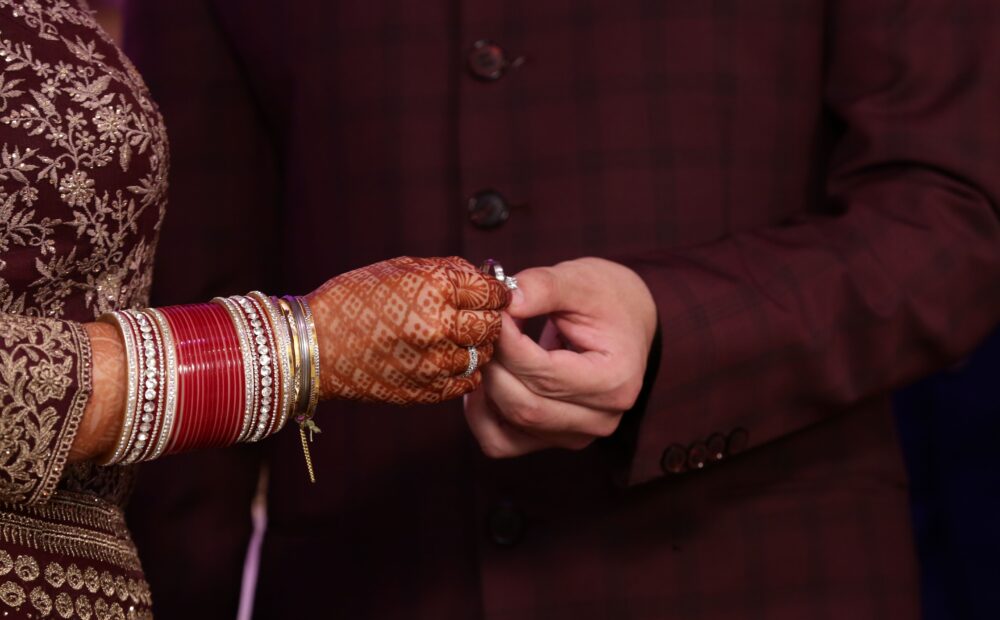
Ever wonder why your wedding ring sits on the fourth finger and not, say, the middle one? The answer goes back thousands of years, to an ancient belief that this particular finger held a direct line to the heart.
Ancient Egyptians, and later the Romans, believed the fourth finger of the left hand contained a vein running straight to the heart — the vena amoris, or ‘vein of love.’ A ring placed there was, in theory, placed exactly where love lived. Modern anatomy has since disproved the existence of that specific vein, but the emotional pull of the idea never really went away, and the ring finger stayed tied to romance and devotion.
There was also a simpler, more practical reason. In many cultures, the fourth finger was considered the most graceful and least used for daily tasks. The thumb and index finger get used constantly, the middle finger is bigger and more central, and the little finger is often too small to hold a traditional band securely. That left the fourth finger as the most sensible option for a ring meant to be worn all day, every day.
Different cultures built their own layers on top of this. Many Western countries settled on the left hand as the norm, and in some Christian traditions, the ring’s unbroken circle came to represent eternal commitment. In other places, couples wear their rings on the right hand instead — proof that the placement is really about the gesture, not the exact spot.
The tradition has stuck around because a wedding ring, unlike most symbols, gets worn constantly — reinforcing its meaning day after day. Even now, with couples choosing everything from plain bands to no rings at all, the fourth finger still signals commitment and connection.



Leave a Reply